Testimonials


-
Can’t recommend this company enough!! Matt and Mark were excellent to work with, very friendly and professional. Mark did an amazing job, made an arduous... read more
 Autumn
-
Matthew and his crew were professional and pleasant to work with. Price to cut down trees impeding some plumbing in my house was affordable.... read more
Kori R.
-
Amazing professionals! Super fast and efficient! Excellent equipment and safety! These guys know what they are doing and do a great job!
Jane G.


Check Your Tree’s Pulse: Early Warning Signs of Tree Stress Homeowners Shouldn’t Ignore in Winter Park, Lake Mary & Heathrow
Trees don’t usually fail without warning. Long before a branch breaks or a tree becomes a safety concern, subtle changes often appear — signs that something inside the tree isn’t functioning as it should. At Aggressive Tree Pros, we often describe these signals as a tree’s “pulse.”
Knowing how to recognize these early indicators can help homeowners address potential issues sooner, reducing risk and avoiding costly emergency situations later.
What Does “Tree Pulse” Mean?
“Tree pulse” isn’t a technical term, but it’s a useful way to describe the visible clues trees give off when they’re under stress. These clues may point to underlying problems such as root damage, internal decay, soil saturation, or structural imbalance.
Professional arborists, including those certified by the International Society of Arboriculture, are trained to interpret these warning signs before failure occurs.
A Simple Tree Stress Check You Can Do This Week
Take a few minutes to walk around your property and look closely at your trees. Pay attention to the following warning signs. Avoid climbing trees or attempting major cuts yourself — if a tree shows signs of instability or poses a risk to people or property, contact a professional for evaluation.
Brittle Branches That Snap Easily
Healthy branches have some flexibility. If branches snap easily with little pressure, it can indicate internal decay, disease, drought stress, or nutrient issues. When brittleness appears across multiple limbs, it may signal a broader health problem rather than a single dead branch.
Seasonal maintenance plays a role here as well. Learn more about why cooler weather is ideal for tree trimming and how preventative pruning helps reduce long-term stress.
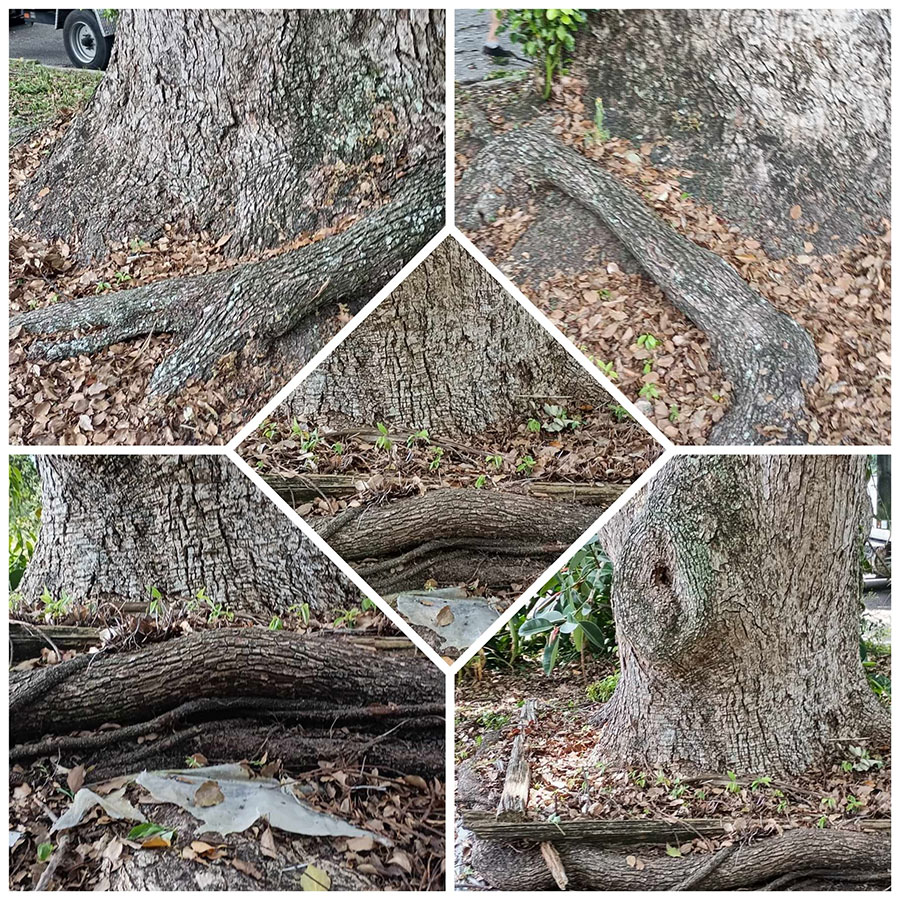
Sudden Leaning or Shifting After Heavy Rain
A tree that starts leaning after heavy rainfall may be dealing with root instability or saturated soil conditions. In Central Florida’s sandy soils, excess moisture can quickly reduce root support, making this an important sign to take seriously.
Soft or Spongy Areas on the Trunk
Tree trunks should feel solid. Soft or spongy spots often signal internal rot beneath the bark. Even if the tree still looks healthy from a distance, trunk decay can significantly weaken its structural strength.
If you notice these conditions, review our guide on signs of tree decay homeowners shouldn’t ignore.
Mushrooms or Fungal Growth at the Base
Fungal growth near the base of a tree is one of the most common external indicators of internal decay or root issues. While some fungi grow harmlessly on surface mulch, mushrooms emerging directly from the soil or trunk often signal decay below ground and should be professionally evaluated.
Florida homeowners can find additional science-based guidance through the University of Florida IFAS Extension tree resources, which outline common causes of tree decline in Florida landscapes.
Why These Early Warning Signs Matter
Tree failures are rarely sudden or random. In most cases, they happen after months or even years of internal decline that goes unnoticed. Recognizing stress signs early allows homeowners to reduce safety risks, address problems before storms make them worse, preserve healthy trees through corrective care, and avoid emergency removals whenever possible.
Being proactive is almost always safer — and more cost-effective — than waiting.
When to Call a Professional
Seeing one of these signs doesn’t automatically mean a tree needs to be removed. However, it does mean the tree should be evaluated by someone who understands how trees respond to stress and structural change.
Aggressive Tree Pros provides honest assessments to help homeowners determine whether a tree can be stabilized, pruned, or safely removed when necessary. The goal is always to protect both tree health and property safety.
Schedule a Tree Evaluation
If you’re concerned about the condition of your trees, contact Aggressive Tree Pros & Stump Grinding LLC for a no-hassle estimate.
Matthew Hendricks: (407) 886-1800
Waleska Hendricks: (386) 215-7816
Learn more about our local services:
Frequently Asked Questions About Understanding Tree Stress & Early Warning Signs
References
Local Tree Care You Can Trust
Aggressive Tree Pros & Stump Grinding LLC is a full-service tree company in Central Florida with decades of experience. Our staff includes a certified arborist and is ready to help you every step of the way. Contact us to schedule a free estimate and get started today. Need a professional eye? Call (407) 886-1800, (386) 215-7816 (Español) to request a free estimate or email us at [email protected] to have a certified arborist inspect your trees today.
Book a Free Estimate
Our success is built on your satisfaction. We treat all our customers like they are family. We are ready to meet and exceed your expectations! Our staff includes a certified arborist and is ready to help you every step of the way.
Contact us by email or call (407) 886-1800 to get started today.