Emergency Tree Services
Emergency Tree Services
Emergency tree services address situations where a tree or large limb poses an immediate risk to people, structures, or access due to storm damage, structural failure, or sudden instability. Severe weather, saturated soils, and high winds can quickly turn otherwise stable trees into urgent hazards that require professional assessment and controlled removal.
Aggressive Tree Pros & Stump Grinding LLC provides emergency tree services for homeowners and property managers in Lake Mary, Winter Park, DeLand, and the greater Orlando area, focusing on safety-first response, risk mitigation, and clear decision-making during time-sensitive situations. Our role is to evaluate the condition of damaged or compromised trees and take appropriate action to reduce danger while protecting surrounding property.
The Importance of Emergency Tree Services
In Lake Mary, sudden storms, saturated soils, and high winds can cause trees or large limbs to fail without warning, creating immediate safety risks for homes, vehicles, and access points. Emergency tree services are required when these conditions pose an active hazard that cannot wait for routine scheduling.
Aggressive Tree Pros & Stump Grinding LLC provides emergency tree services for Lake Mary homeowners, with support throughout Winter Park, DeLand, and the greater Orlando area, focusing on hazard assessment, risk reduction, and controlled response during time-sensitive situations.
Comprehensive Emergency Services
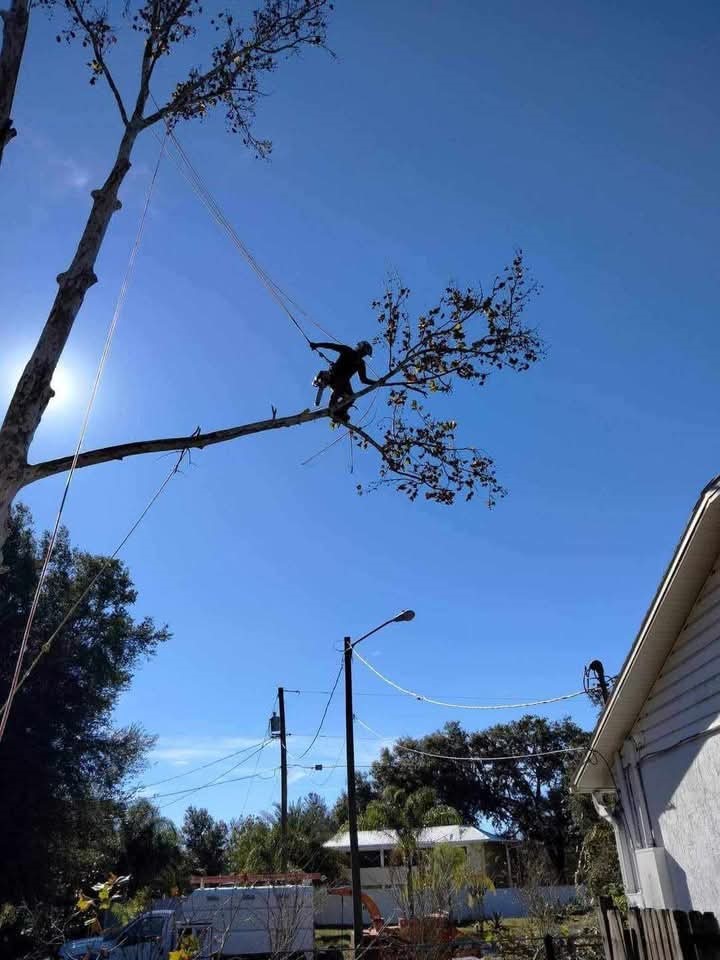
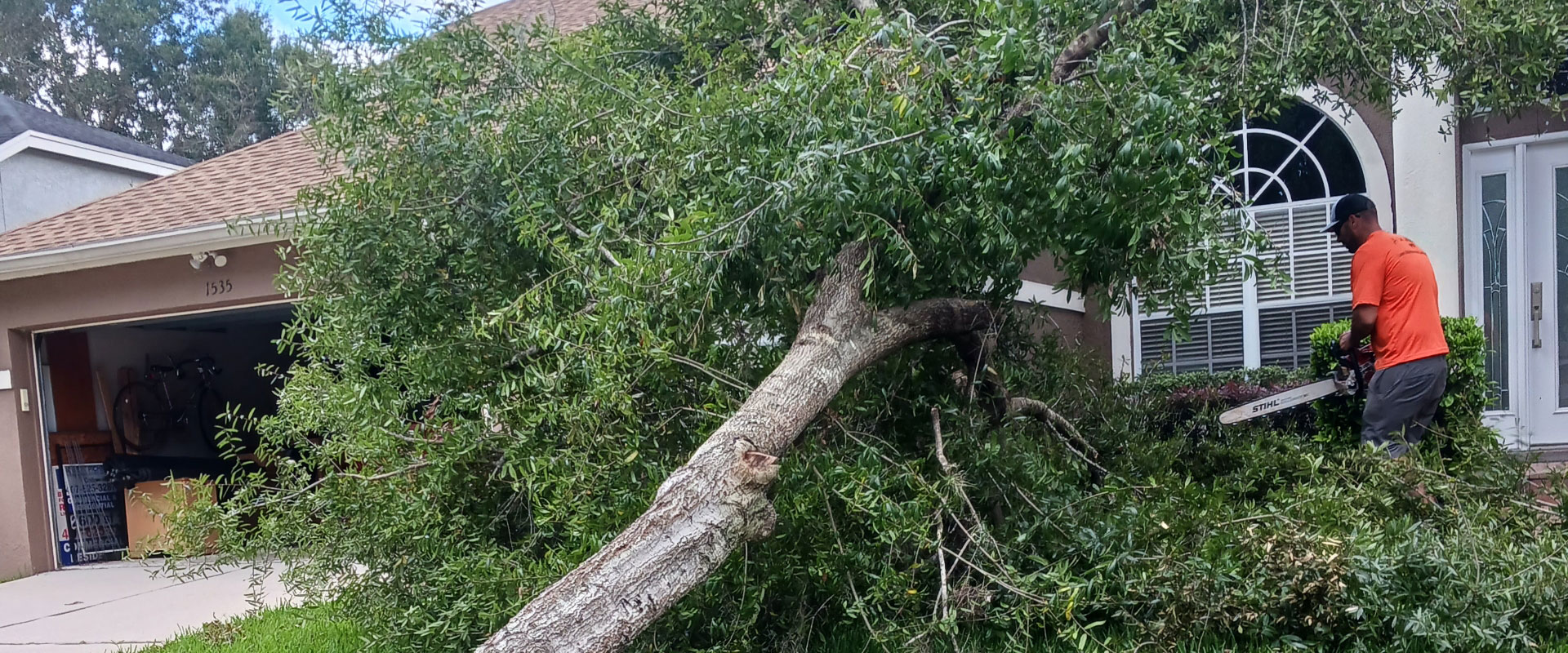
Emergency tree services may involve removing fallen trees, clearing storm debris, or securing trees that have been damaged and pose an immediate risk. These situations often require prompt action to restore access and reduce safety hazards following storms or unexpected tree failure.
Aggressive Tree Pros & Stump Grinding LLC provides emergency tree services for Lake Mary homeowners, with service support in Winter Park, DeLand, and the greater Orlando area. Emergency response is available 24 hours a day to address urgent tree hazards, with work focused on safe execution, proper equipment use, and controlled resolution of time-sensitive conditions.
For emergency tree services, contact Aggressive Tree Pros & Stump Grinding LLC. Call (407) 886-1800 to get started today.
Common Emergency Tree Situations in Lake Mary, Winter Park & DeLand
Emergency tree situations can develop quickly after storms, heavy rainfall, high winds, lightning strikes, or structural decline. For property owners in Lake Mary, Winter Park, DeLand, and the Greater Orlando Area, understanding how to tell if a tree is dangerous near your home and recognizing the early signs of a hazardous tree can help prevent damage to homes, vehicles, driveways, fences, and surrounding property.
Warning Signs That May Require Emergency Tree Service
- A tree has fallen across a driveway, yard, fence, or access area
- Large limbs are cracked, broken, or hanging over a home, roof, walkway, or vehicle
- A tree is leaning suddenly after a storm or heavy rain
- The trunk is split, hollow, cracked, or showing signs of structural failure
- Roots are lifting, exposed, or pulling away from saturated soil
- Branches are tangled near structures, service lines, or other trees
- A storm-damaged tree appears unstable or likely to fail
Not every damaged tree requires immediate removal, but a tree that has shifted, split, dropped major limbs, or become unstable should be evaluated promptly. Emergency tree service often begins with recognizing whether the tree or limb presents an active hazard to people, structures, vehicles, or access points.
Leaving a structurally compromised tree unaddressed can increase the risk of property damage, personal injury, and more costly repairs if a failure occurs. Understanding what happens if a hazardous tree is not removed can help property owners make informed decisions before a dangerous situation becomes more serious.
What To Do After Storm Damage Affects a Tree
Storm damage is not always as obvious as a fallen tree or broken limb. Heavy rain, saturated soil, lightning, and strong winds can weaken roots, trunks, and major branches in ways that may not be immediately visible from the ground. When storm damage is suspected, the safest first step is to keep people, pets, and vehicles away from the affected area until the tree can be evaluated.
Steps To Take After a Tree Is Damaged by a Storm
- Stay clear of broken limbs, leaning trees, hanging branches, and damaged trunks
- Do not stand under suspended limbs or attempt to pull down branches by hand
- Keep children, pets, and vehicles away from the affected area
- Look for signs of root movement, soil lifting, trunk cracks, or sudden leaning
- Avoid cutting large limbs or unstable sections without proper equipment
- Take photos of visible damage if it is safe to do so
- Contact a professional tree service when the tree may threaten a structure, driveway, fence, or access point
Storm damage does not always mean a tree has fully failed, but it can create hidden instability that should be taken seriously. A tree that appears upright may still have cracked limbs, weakened attachment points, damaged roots, or canopy weight that shifted during the storm. These conditions are especially important to evaluate before additional rain or wind places more stress on the tree.
If a tree has already fallen onto a house, garage, or other occupied structure, the priority shifts from assessment to protecting people and preventing additional damage. Understanding what to do when a tree falls on your home can help property owners respond safely while preparing for a professional assessment and any emergency tree service that may be required.
Not every emergency begins after a tree has fallen. Trees that are leaning, partially uprooted, split, or structurally compromised after severe weather may require immediate attention before additional wind or rain increases the risk. Understanding when emergency tree removal after storm damage may be necessary can help property owners recognize situations where waiting for routine service is no longer the safest option.
Preparing trees for severe weather before storm season arrives can help reduce the likelihood of preventable damage. Understanding hurricane season tree care tips can help property owners identify potential concerns before high winds and heavy rain create emergency conditions. When storm damage has already occurred, the priority is to identify immediate hazards, secure the area, and determine whether the affected tree or limb requires emergency service.
When Emergency Tree Removal May Be Necessary
While some storm-damaged trees can be stabilized, pruned, or monitored, others suffer damage that significantly affects their structural integrity and long-term stability. In these situations, the decision often shifts from emergency response to determining whether the tree can be safely retained or whether removal represents the safest practical solution.
Factors That Influence Emergency Tree Removal Decisions
- The extent of structural damage to the trunk, root system, or major support limbs
- The likelihood that additional failure could occur without warning
- The tree’s proximity to homes, vehicles, walkways, driveways, or utility corridors
- Whether corrective pruning or stabilization can reasonably reduce the hazard
- The level of risk to people using the property or surrounding area
- The long-term viability of the tree after the damage has occurred
- Whether retaining the tree would create an unacceptable safety concern
Emergency tree removal decisions are not based solely on whether a tree appears damaged. They are based on whether the tree can remain safely in place after its condition has been evaluated. A tree with severe structural compromise may continue to weaken, shift, or fail over time, even after the immediate storm or emergency has passed.
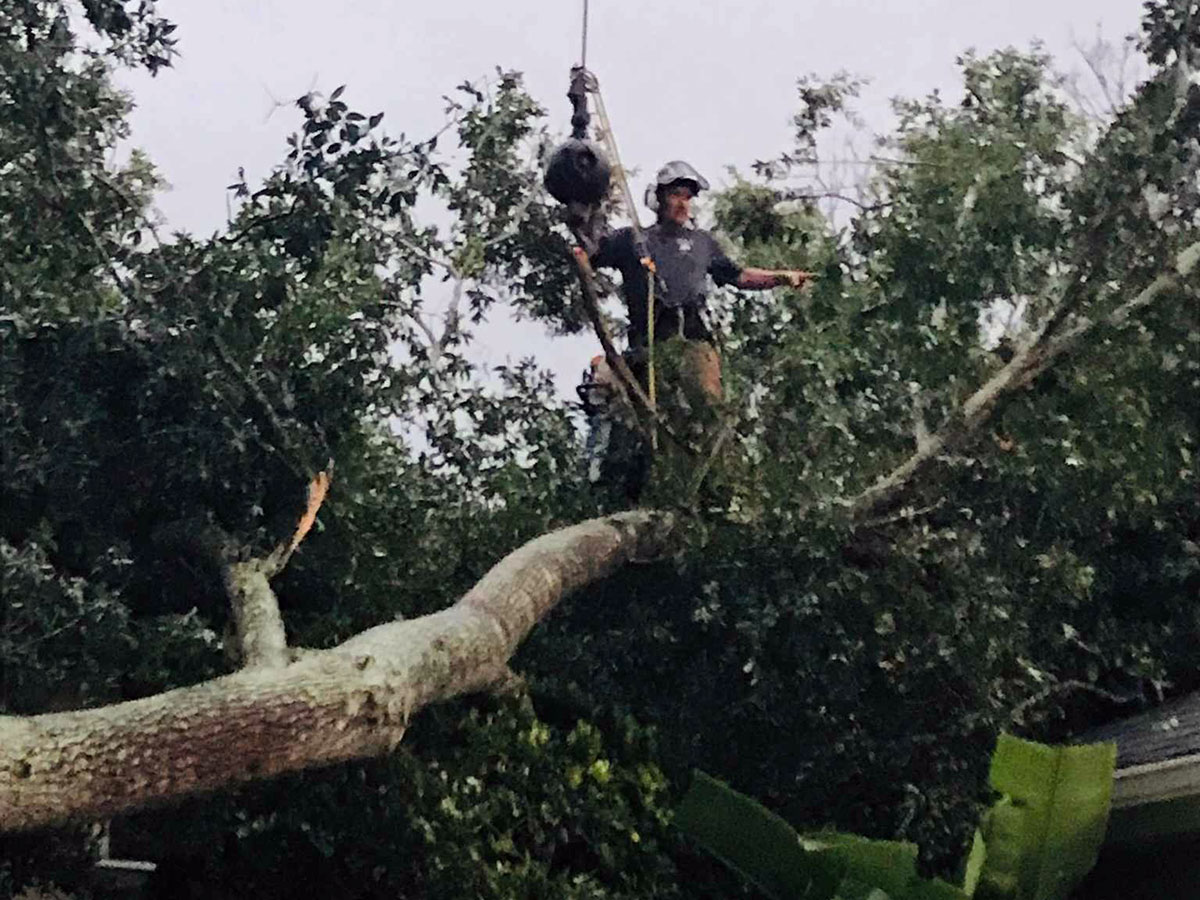
A recent emergency tree removal demonstrates how severe structural compromise can affect the approach to a project. At an Orlando golf course, extreme decay had compromised the base of a large Laurel oak positioned over a cart path. The tree was not stable enough for standard rigging, requiring a crane-assisted approach for the emergency tree removal in Orlando.
Not every storm-damaged tree requires removal. Some trees can be repaired or safely monitored after a professional evaluation. Understanding whether a storm-damaged tree should be repaired, removed, or monitored can help property owners better understand the factors that influence those decisions before making long-term tree care decisions.
Understanding the difference between emergency removal and routine tree work helps property owners make informed decisions when safety, access, and property protection are at stake. When removal becomes the safest practical option, professional tree removal services can address hazardous conditions while helping minimize the risk of additional damage to the surrounding property.
Emergency Tree Services FAQs
Additional Information on Emergency Tree Services in the Lake Mary Area
Emergency tree services are intended for situations where waiting is not an option and immediate action is required to reduce risk. Understanding when a tree or large limb presents a true hazard allows property owners to make informed decisions during stressful, time-sensitive conditions.
Aggressive Tree Pros & Stump Grinding, LLC provides emergency tree services based in Lake Mary, Florida, supporting nearby communities in Winter Park, DeLand and the Greater Orlando Area when urgent tree hazards arise. The focus of emergency work is risk evaluation, controlled response, and restoring safety without introducing additional danger.
Book a Free Estimate
Our success is built on your satisfaction. We treat all our customers like they are family. We are ready to meet and exceed your expectations! Our staff includes a certified arborist and is ready to help you every step of the way.
Contact us by email or call (407) 886-1800 to get started today.