Testimonials


-
Aggressive Tree Pros and Stump Grinding are professional and thorough. From start to finish first class service. They are my go to when I have... read more
 Joanne R.
-
This tree service - Palm tree trim- was excellent. On time, fast, and clean! Great experience and will use them again!
Mark K.
-
Best tree removal company! Honest, fair quotes, aggressive , efficient with thorough cleanup. Great crew. I highly recommend this company
Barbara L.


How to Tell if a Tree Is Dangerous Near Your Home in Lake Mary, FL
If a tree stands close to your home, the real concern is not whether it looks healthy — it is whether it could fail under pressure. Most dangerous trees show warning signs before they cause damage. The challenge is knowing which signals indicate structural risk and which ones are cosmetic. For homeowners in Lake Mary and nearby communities in Winter Park, DeLand, and throughout the Greater Orlando Florida Area, recognizing that difference can prevent serious property damage.
Some Trees Show Clear Warning Signs. Others Fail Without Notice
A tree becomes dangerous when condition and location intersect. It is not just about visible decline. It is about what would happen if that tree failed. Below are the warning signs that deserve attention.
Obvious Danger Signs
- Sudden Leaning: A tree that begins leaning — especially after storms — may have experienced root failure. Lean that increases over time signals instability.
- Cracks in the Trunk: Vertical splits, large structural cracks, or separated bark weaken load-bearing strength.
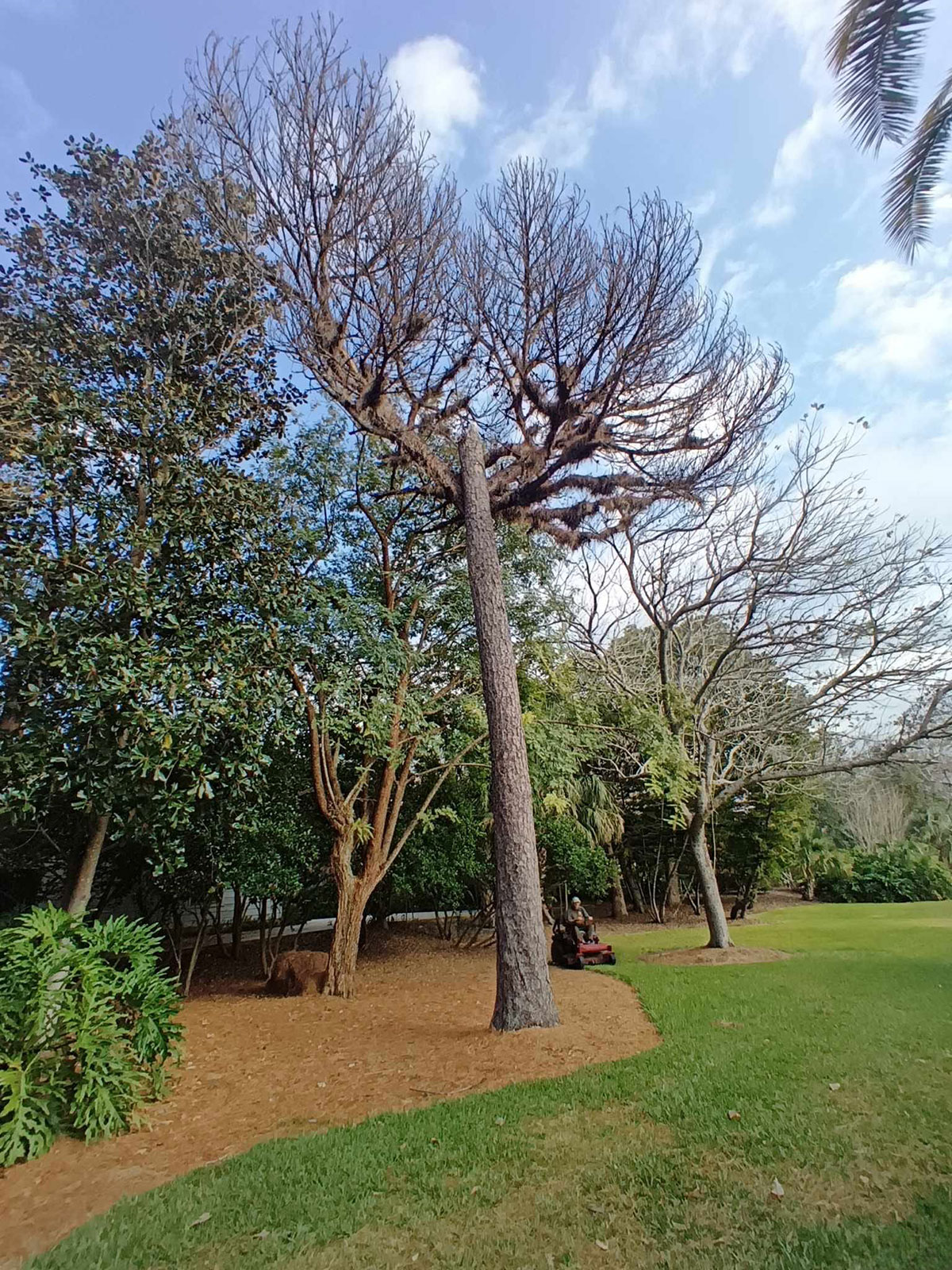
- Large Dead Limbs: Overhead branches that have lost foliage or show decay can detach unexpectedly during wind.
- Multiple Structural Defects: When leaning, cracking, and deadwood appear together, overall failure risk rises.
Less Obvious Warning Signs
- Canopy Thinning or Dieback: Sections that fail to leaf out may indicate internal stress or decline.
- Root Movement or Soil Uplift: Raised soil, exposed roots, or shifting ground near the base can signal anchoring problems below the surface.
- Fungal Growth at the Base: Mushrooms near ground level may point to decay within the root system.
- Progressive Structural Change: Slow imbalance, bark separation, or gradual posture shift deserves closer evaluation.
Location-Based Risk Matters
Condition alone does not determine danger. Proximity determines consequence.
- If this tree failed, what would it hit?
- Is it within striking distance of your home, garage, fence, or vehicles?
- Would falling limbs affect walkways, driveways, or high-traffic areas?
A tree in open space carries different risk than the same tree positioned within falling distance of your roof.
When a Tree Becomes a Real Hazard
A tree becomes a true hazard when structural weakness and impact potential overlap.
- A minor lean in open land may be manageable.
- A minor lean toward your home may not be.
- A hollow trunk far from structures may pose limited concern.
- A hollow trunk directly over living space presents a different level of consequence.
Hazard evaluation combines:
- Structural integrity
- Root stability
- Lean direction
- Distance to structures
- Potential impact outcome
When multiple risk factors align, the likelihood of property damage increases.
What to Do Next
If you observe warning signs, avoid waiting for visible failure.
Monitor changes in lean, cracking, or canopy decline. Avoid parking vehicles or allowing activity beneath unstable limbs.
If a tree appears unstable, has suffered storm damage, or presents an immediate threat to people, structures, vehicles, or access points, prompt action may be necessary. Understanding when a situation requires emergency tree services can help property owners reduce risk before a damaged tree or large limb causes additional damage.
If structural instability exists near your home, professional removal may be the safest option. Learn how removal decisions are handled on our Tree Removal page.
If you are unsure whether trimming could correct the issue or whether removal is the safer choice, review our guide on when to remove a tree versus when to trim it in Lake Mary, FL before making a final decision.
Frequently Asked Questions About Dangerous Trees Near Your Home
Talk With a Local Tree Expert
Aggressive Tree Pros & Stump Grinding LLC works with homeowners in Lake Mary, Winter Park, DeLand, and throughout the Greater Orlando Florida Area to determine whether a tree has become a genuine structural risk. When warning signs are present but the next step is unclear, a professional evaluation can help determine whether the issue can be addressed through trimming or whether full removal is the safer course of action. Acting before visible failure occurs reduces uncertainty and protects your property.
Need a professional eye? Call (407) 886-1800, (386) 215-7816 (Español) to request a free estimate or email us at [email protected] to have a certified arborist inspect your trees today.
Like and Follow Aggressive Tree Pros, LLC on Facebook and Instagram for new tree care tips and advice every week.
Book a Free Estimate
Our success is built on your satisfaction. We treat all our customers like they are family. We are ready to meet and exceed your expectations! Our staff includes a certified arborist and is ready to help you every step of the way.
Contact us by email or call (407) 886-1800 to get started today.