Testimonials


-
Can’t recommend this company enough!! Matt and Mark were excellent to work with, very friendly and professional. Mark did an amazing job, made an arduous... read more
 Autumn
-
Matthew and his crew were professional and pleasant to work with. Price to cut down trees impeding some plumbing in my house was affordable.... read more
Kori R.
-
Aggressive tree pros did a fabulous job of clearing my back yard out and preparing her for a fence install. Highly recommend these guys... read more
Baby B.


What Happens If a Hazardous Tree Is Not Removed in Lake Mary, FL
Hazardous trees are often left standing longer than they should be because the problem does not always feel immediate.
In areas like Lake Mary, Winter Park, and throughout the Greater Orlando Florida Area, a tree may still have leaves, appear mostly upright, or continue standing for months before a serious failure occurs. But when structural instability, decay, root damage, or progressive lean are ignored, the risks can increase over time rather than stabilize on their own.
In many situations, homeowners delay action because the tree has remained standing for years without obvious failure, making the underlying risk easier to underestimate.
In many cases, hazardous tree conditions continue worsening without intervention. Storm exposure, saturated soil, high winds, root deterioration, and internal decay can gradually weaken the tree further, especially during Florida’s storm season. Understanding what can happen when a dangerous tree is left unaddressed can help homeowners make more informed decisions about long-term property safety and when tree removal may become necessary.
Hazardous Trees Often Continue to Deteriorate Over Time
One of the most common misconceptions homeowners have is that if a hazardous tree has not failed yet, it may remain stable indefinitely. In reality, many dangerous trees continue to weaken gradually as environmental stress accumulates.
Structural cracks can widen, decay can spread internally, and compromised root systems can become less stable after repeated storms or prolonged soil saturation. Trees that already lean toward a home, driveway, fence, or neighboring property may also continue shifting incrementally over time.
Some warning signs are subtle at first. Homeowners who are unsure whether a tree may already present a safety concern may benefit from learning how to recognize signs of a dangerous tree near a home before conditions worsen further.
Property Damage Risks Can Increase
When a hazardous tree is not removed, the most immediate concern is often property damage. Falling limbs or full tree failure can impact roofing systems, screened enclosures, vehicles, fencing, power lines, sheds, and other nearby structures.
In and around Lake Mary, heavy rain and wind events can place additional stress on already compromised trees. A tree that appears stable during dry conditions may respond differently during storms when the ground becomes saturated and wind resistance increases throughout the canopy.
Even partial failures can create significant repair costs. Large limbs falling onto roofing systems may lead to water intrusion, structural damage, insulation issues, or secondary interior damage if not addressed quickly.
Root-related problems may also become more severe over time. Depending on the species and proximity to the home, expanding root systems can contribute to lifted hardscapes, cracked walkways, drainage disruption, or pressure against nearby structures.
Delayed Removal Can Lead to Higher Costs Later
In some situations, homeowners postpone removal because the tree has not completely failed yet. However, waiting too long can sometimes make the eventual removal process more complicated and expensive.
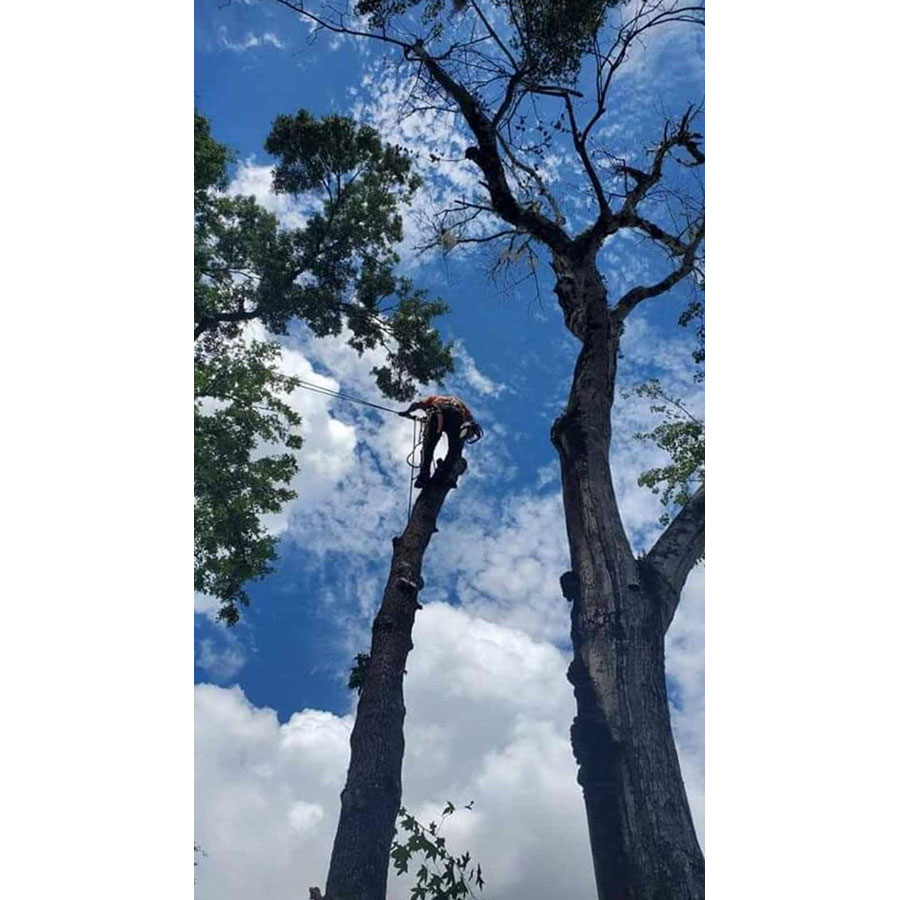
A tree that deteriorates further may require more controlled dismantling, crane assistance, emergency tree services, or additional cleanup if structural failure occurs unexpectedly. Damage to nearby structures can also increase overall repair costs beyond the removal itself.
This does not mean every questionable tree requires immediate removal. In some situations, trimming or corrective maintenance may still be appropriate. Understanding when a tree should be removed versus when trimming may still be appropriate can help homeowners evaluate the situation more clearly before risks escalate further.
Neighboring Property and Liability Concerns
Hazardous trees do not only affect the property where they are located. Trees positioned near lot lines, shared fences, neighboring homes, parked vehicles, or adjacent walkways may create broader concerns if structural failure occurs.
As visible warning signs become more obvious, homeowners may also become more aware of the potential liability implications associated with leaving a compromised tree unaddressed. While every situation is different, documented deterioration, progressive lean, visible decay, or repeated limb failures can increase concern surrounding future damage risks.
For this reason, many homeowners in the Lake Mary area choose to evaluate hazardous trees before major storm activity arrives rather than waiting for worsening conditions.
Hazardous Trees Rarely “Fail Without Warning
Although some tree failures appear sudden, many hazardous trees show signs of decline beforehand. The warning signs may develop gradually and become easier to overlook as homeowners become accustomed to seeing the tree every day.
Progressive lean, hollow areas, bark separation, root upheaval, dead canopy sections, fungal growth near the base, repeated limb drop, and visible cracking can all indicate that stability may already be compromised.
This does not necessarily mean the tree will fail immediately. However, when multiple warning signs begin appearing together, the likelihood of continued deterioration generally increases rather than decreases.
What Homeowners Should Do If They’re Unsure
Not every questionable tree requires removal, and not every leaning or aging tree is necessarily hazardous. But when visible signs of instability are present near a home or heavily used area of the property, delaying evaluation for too long can increase uncertainty and risk.
Homeowners in Lake Mary, Winter Park, DeLand, and surrounding parts of the Greater Orlando Florida Area often choose to have questionable trees evaluated before hurricane season or after major storms when new structural damage may have developed.
Understanding whether a tree can be safely maintained, trimmed, monitored, or removed usually starts with evaluating the overall condition of the trunk, canopy, root system, and surrounding environment together rather than focusing on a single symptom alone.
Frequently Asked Questions About Hazardous Trees and Delayed Removal
Talk With a Local Tree Removal Company in Lake Mary, FL
If you have concerns about a hazardous tree near your home, evaluating the condition early can help prevent larger structural, safety, or property issues from developing later. Aggressive Tree Pros provides tree removal services for homeowners in Lake Mary, Winter Park, DeLand, and surrounding areas throughout the Greater Orlando Florida Area.
Whether a tree requires monitoring, trimming, or full removal, understanding the level of risk involved is often the first step toward protecting your property before larger problems develop.
Need a professional eye? Call (407) 886-1800, (386) 215-7816 (Español) to request a free estimate or email us at [email protected] to have a certified arborist inspect your trees today.
Like and Follow Aggressive Tree Pros, LLC on Facebook and Instagram for new tree care tips and advice every week.
Book a Free Estimate
Our success is built on your satisfaction. We treat all our customers like they are family. We are ready to meet and exceed your expectations! Our staff includes a certified arborist and is ready to help you every step of the way.
Contact us by email or call (407) 886-1800 to get started today.