Testimonials


-
Aggressive tree pros is highly recommended. Matt and his crew are dedicated and knowledgeable professionals.
 ARSENE P.
-
Mathew and his team did an excellent job trimming our queen palm trees. The trees were overgrown but his team made short work of getting... read more
Craig D.
-
We have 2 very large live oaks that were towering over our 2 story house. Matthew and his team of pros had them looking perfect,... read more
Dahuuugest1


Should a Storm-Damaged Tree Be Repaired, Removed, or Monitored?
Strong storms can leave trees looking damaged without making it immediately obvious what should happen next. Some damage is visible immediately after severe weather, while other problems may not become apparent until days or even weeks later. While many trees recover with proper care, others continue to weaken over time and may eventually become a serious safety concern. Knowing the difference can help homeowners make informed decisions before hidden structural damage results in additional property damage or an unexpected tree failure.
For homeowners in Lake Mary, Winter Park, DeLand, and surrounding areas throughout the Greater Orlando Florida Area, storm damage often raises one important question: should the tree be repaired, removed, or simply monitored? The answer depends on the type of damage, the overall health of the tree, and whether it continues to pose a risk to your home, vehicles, neighboring property, or the people who use your landscape every day.
Not Every Storm-Damaged Tree Needs Immediate Removal
Seeing broken limbs after a storm does not automatically mean the entire tree must be removed. Many mature trees recover from relatively minor damage when the main trunk and root system remain healthy.
The challenge is that storm damage is not always obvious from the ground. Cracked limbs, split trunks, compromised roots, and hidden structural damage can continue to worsen long after the weather has cleared. A tree that appears stable today may become increasingly hazardous during the next period of heavy rain or strong winds.
Understanding the extent of the damage is often the first step in determining whether continued observation, corrective pruning, or emergency tree services are the most appropriate course of action.
When Repair May Be the Best Option
Some storm damage can often be addressed without removing the entire tree.
Repair may be appropriate when:
- Small broken limbs can be professionally pruned.
- Canopy damage is limited and the trunk remains structurally sound.
- Branch loss has not significantly affected the tree’s balance.
- The root system shows no evidence of failure or soil movement.
- The tree remains healthy with good long-term growing potential.
Professional pruning can often remove damaged limbs while encouraging healthy future growth. Preserving a healthy mature tree often provides long-term environmental, landscape, and property value benefits.
When Monitoring a Storm-Damaged Tree May Be Appropriate
Not every storm-damaged tree requires immediate action.
Some trees benefit from continued observation when the damage is relatively minor and there are no immediate safety concerns.
Monitoring may include watching for:
- New cracks developing in major limbs.
- A tree that begins leaning more after heavy rainfall.
- Dead branches appearing over time.
- Fungal growth around the base of the trunk.
- Soil movement or exposed roots.
- Gradual canopy decline during the months following the storm.
Storm damage does not always reveal its full impact immediately. Monitoring these changes can help identify developing problems before they become emergency situations.
Storm Damage Can Continue to Change After the Weather Clears
One of the biggest misconceptions homeowners have is believing the danger ends when the storm passes.
In reality, damaged trees often continue to deteriorate after the weather improves. Moisture can enter exposed wood, weakened limbs can continue separating, and compromised roots may lose additional stability as saturated soil shifts.
This delayed progression explains why some storm-damaged trees fail days or even weeks after the original weather event. Evaluating damage early gives homeowners the opportunity to address changing conditions before they create larger safety concerns.
Signs Removal May Be the Safer Choice
Certain types of storm damage significantly increase the likelihood of future failure.
Removal may become the safest long-term solution when a tree has:
- A split or severely cracked trunk.
- Major structural limbs that have broken away.
- Significant root damage or an unstable root system.
- A noticeable lean that developed after the storm.
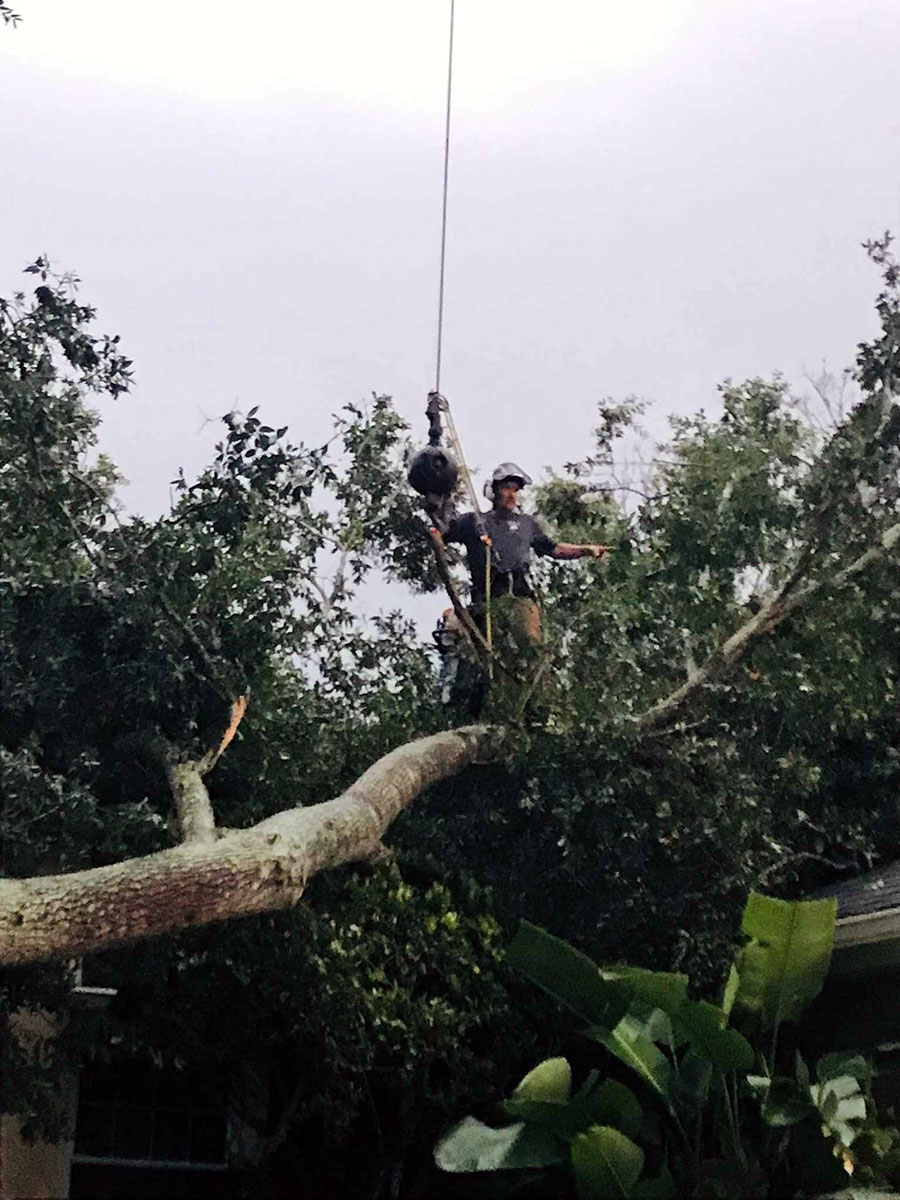
- Large hanging limbs threatening people or property.
- Extensive decay exposed by storm damage.
When multiple structural problems exist together, preserving the tree may no longer be practical. In those situations, professional tree removal may provide the most effective way to protect your home and surrounding property.
Making the Right Decision After Storm Damage
Every storm-damaged tree presents a different set of circumstances. The tree’s species, age, overall condition, location, and proximity to nearby structures all influence the best course of action.
Sometimes corrective pruning is enough.
Sometimes continued monitoring is appropriate.
Sometimes removal becomes the safest long-term decision.
Making the right choice begins with understanding the condition of the entire tree rather than focusing only on the most visible damage. That approach helps homeowners avoid unnecessary removals while reducing the likelihood that a damaged tree develops into a future emergency.
Frequently Asked Questions
Learn More About Emergency Tree Services After Storm Damage
Storm damage affects every property differently, and determining whether a tree should be repaired, monitored, or removed often requires evaluating the entire tree rather than focusing on one broken branch or visible wound. Understanding what to do when a tree falls on your home during a storm, recognizing whether storm damage has left a tree dangerous near your home, and knowing when emergency tree services are appropriate all work together to help homeowners make informed decisions after severe weather.
If you have concerns about storm-damaged trees on your property, Aggressive Tree Pros provides emergency tree services for homeowners throughout Lake Mary, Winter Park, DeLand, and surrounding areas throughout the Greater Orlando Florida Area. Whether your tree requires continued monitoring, professional pruning, or safe removal, an informed evaluation can help protect your property and the people who matter most.
Need a professional eye? Call (407) 886-1800, (386) 215-7816 (Español) to request a free estimate or email us at [email protected] to have a certified arborist inspect your trees today.
Like and Follow Aggressive Tree Pros, LLC on Facebook and Instagram for new tree care tips and advice every week.
Book a Free Estimate
Our success is built on your satisfaction. We treat all our customers like they are family. We are ready to meet and exceed your expectations! Our staff includes a certified arborist and is ready to help you every step of the way.
Contact us by email or call (407) 886-1800 to get started today.