Testimonials


-
Matt and his team were excellent. They had a small lift machine which allowed them to get into the tight space in our backyard without... read more
 Jonathan S.
-
Aggressive Tree Pros do amazing and timely work at a very fair price. They didn’t just take down 30+ trees on our property, but they... read more
Jadner L.
-
Where do I even begin? Matt with Aggressive Tree Pros & Stump grinding exceeded all expectations! Not only did they expertly trim our trees, but... read more
Arlene F.


Emergency Tree Removal After Storm Damage in the Orlando, Florida Area
Severe storms can change the condition of a tree in a matter of minutes, even when the damage is not immediately obvious.
For homeowners in Lake Mary, Winter Park, DeLand, and surrounding areas throughout the Greater Orlando Florida Area, high winds, heavy rain, lightning, hurricanes, and tropical storms can leave behind broken limbs, split trunks, leaning trees, hanging branches, or damaged root systems that are difficult to evaluate from the ground.
Not every storm-damaged tree requires immediate removal. Some trees can recover with proper pruning, while others suffer damage that makes them increasingly unstable. Many homeowners hesitate because the tree is still standing, making it easy to assume the danger has already passed. Understanding the difference can help determine whether the tree can be safely pruned, should be monitored, or needs to be removed to protect nearby people and property.
Storm Damage Is Not Always Easy to Recognize
After a storm passes, obvious damage such as a fallen tree or a large broken limb usually receives immediate attention. Less visible damage, however, can be just as important.
Throughout the Lake Mary area, powerful winds can twist trunks, loosen major limbs, damage root systems, or create internal fractures that are difficult to recognize without a closer inspection. A tree may remain standing for days or weeks before another period of wind or heavy rain causes additional failure.
For many homeowners, this uncertainty is the greatest challenge. A tree that appears upright may no longer be structurally sound.
Common Signs That Emergency Tree Removal May Be Needed
Every storm affects trees differently, but several warning signs deserve prompt attention:
- A tree is leaning significantly more than it did before the storm.
- Large limbs are hanging over a home, driveway, sidewalk, or vehicle.
- Major cracks or splits have developed in the trunk.
- Roots are lifting from the ground or the soil has shifted around the base.
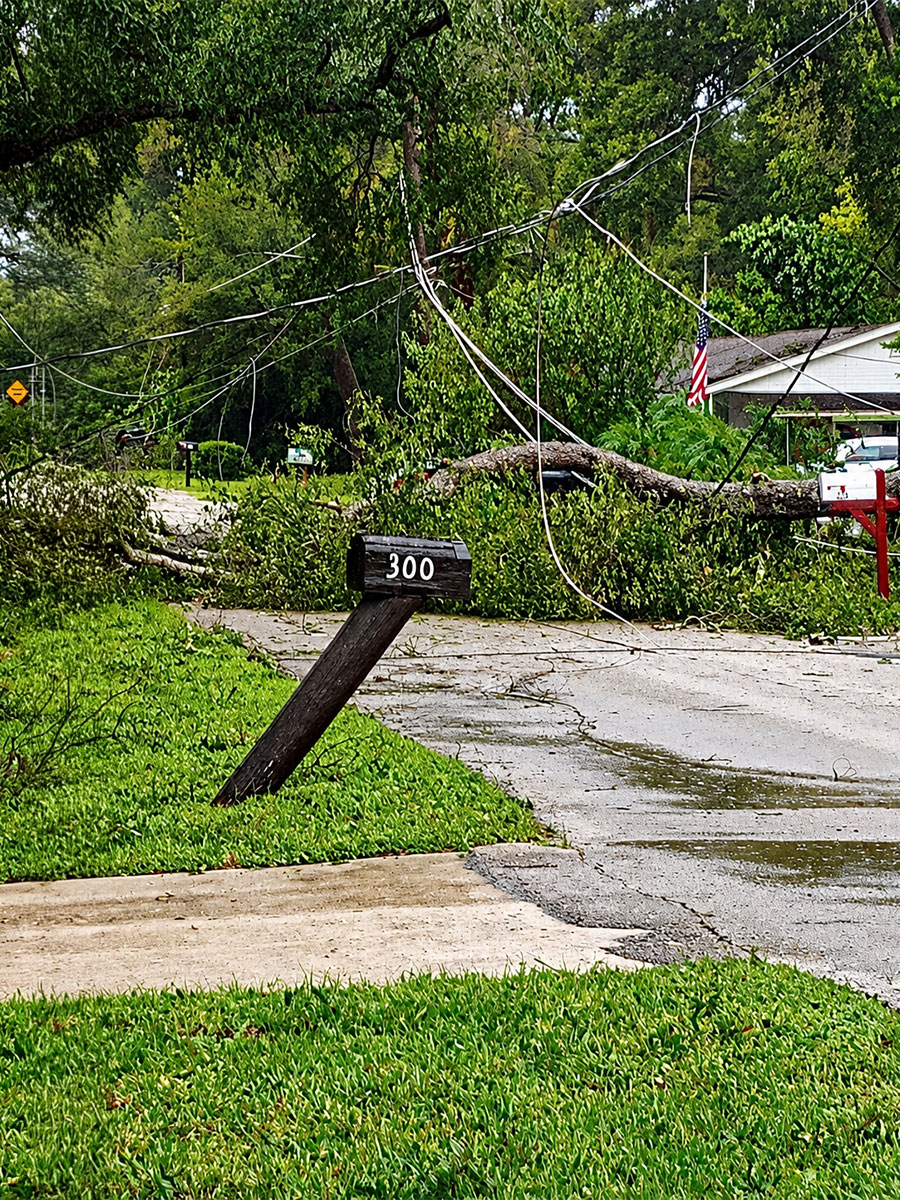
- A tree is resting against another tree, a structure, or a utility line.
- Broken limbs remain suspended high in the canopy.
These conditions do not automatically mean removal is the only solution. However, they often indicate that the tree should be evaluated before additional weather increases the possibility of failure.
Homeowners who are uncertain about the severity of the damage may benefit from understanding how to recognize the warning signs of a dangerous tree near a home, especially when the damage is not immediately obvious.
Even when these warning signs appear relatively minor, hidden damage may continue worsening after the storm has passed.
Why Waiting Can Increase the Risk
After a major storm, some homeowners wait several days before deciding what to do. That may be appropriate when damage is minor, but a compromised tree does not become stronger simply because time has passed.
Across the Greater Orlando Florida Area, repeated summer storms, saturated soil, and additional wind events can place new stress on trees that have already been weakened. A partially cracked limb or damaged root system may remain stable temporarily before failing during the next period of severe weather.
The longer significant storm damage remains unaddressed, the greater the possibility that the tree, a major limb, or the surrounding soil conditions may continue to deteriorate. Understanding what can happen when a hazardous tree remains standing can help homeowners evaluate the consequences of postponing action when serious structural concerns are already present.
Emergency Tree Removal Is Different From Routine Tree Removal
Routine tree removal is generally planned in advance and completed under controlled conditions.
Emergency tree removal focuses on restoring safety after an unexpected event. The immediate priority may be an unstable tree, a hanging limb threatening a structure, a blocked driveway, or a tree that has already fallen onto a home, vehicle, fence, or access area.
When storm damage creates an immediate safety concern, understanding how emergency tree services are prioritized following severe weather can help homeowners determine the safest next step.
Storm Damage Does Not Always Mean the Tree Must Be Removed
One of the most common misconceptions after severe weather is that every damaged tree must be cut down.
Some trees lose branches but remain structurally healthy enough to recover through proper pruning and ongoing care. Others suffer extensive trunk damage, severe root failure, or instability that makes removal the safer long-term option.
The decision should be based on the condition of the entire tree rather than one broken limb. Important factors include the stability of the trunk and roots, the amount of canopy damage, the tree’s proximity to structures, and what could be affected if another failure occurs.
Not every storm-damaged tree requires the same response. Some trees can be safely repaired or monitored after a professional evaluation, while others require removal to reduce ongoing risk. Understanding whether a storm-damaged tree should be repaired, removed, or monitored can help property owners better understand the factors that influence those decisions after severe weather.
When removal becomes the safest course of action, understanding when professional tree removal is necessary to protect nearby homes and structures can help homeowners make a more informed decision.
What Homeowners Should Do After Storm Damage
After severe weather moves through the Lake Mary area, safety should always come first.
If a damaged tree is touching utility lines, leaning toward a home, or appears unstable, homeowners should stay away from the affected area. Trees or limbs contacting utility lines should be reported to the appropriate utility provider rather than approached or handled.
It is also helpful to:
- Photograph visible damage when it is safe to do so.
- Keep people, pets, and vehicles away from unstable trees and hanging limbs.
- Avoid attempting to remove large suspended branches without proper equipment.
- Look for changes in the tree’s lean, root area, trunk, or surrounding soil.
- Arrange for a professional evaluation when significant damage is suspected.
Taking these steps can help reduce the likelihood of additional property damage while allowing an informed decision to be made about pruning, monitoring, stabilization, or removal.
Preparing trees before storm season is equally important. Reviewing practical hurricane season tree care and preparation measures can help homeowners identify vulnerable limbs or structural concerns before the next major weather event.
Frequently Asked Questions About Emergency Tree Removal After Storm Damage
Emergency Tree Removal After Storm Damage
Storm damage can leave homeowners with difficult decisions about safety, property protection, and whether a damaged tree can recover or should be removed. Aggressive Tree Pros provides emergency tree services for homeowners in Lake Mary, Winter Park, DeLand, and surrounding areas throughout the Greater Orlando Florida area.
Whether severe weather has left behind broken limbs, a leaning tree, damaged roots, or a fallen tree threatening your property, evaluating the full condition of the tree is the first step toward determining whether it can be safely preserved or whether emergency removal is the safer long-term solution.
Need a professional eye? Call (407) 886-1800, (386) 215-7816 (Español) to request a free estimate or email us at [email protected] to have a certified arborist inspect your trees today.
Like and Follow Aggressive Tree Pros, LLC on Facebook and Instagram for new tree care tips and advice every week.
Book a Free Estimate
Our success is built on your satisfaction. We treat all our customers like they are family. We are ready to meet and exceed your expectations! Our staff includes a certified arborist and is ready to help you every step of the way.
Contact us by email or call (407) 886-1800 to get started today.