Testimonials


-
Matt and his team are responsive, professional and reasonable. Highly recommend Aggressive Tree Pros. Flexible and great to do business with.
 Anne M.
-
Aggressive Tree Pros did a great job getting several trees hurricane ready. Service was fast at a fair price. When I need more... read more
Jim M.
-
I truly enjoy Matthew. He is a great businessman and does such an amazing job for our company.. Will refer him to as many as... read more
Lucia D.


Can Tree Stumps Attract Termites and Other Pests in the Greater Orlando Florida Area?
Many homeowners leave old tree stumps in place because they do not appear to create an immediate problem. Once a tree has been removed, the remaining stump often becomes part of the landscape and may go largely unnoticed for months or even years.
In Lake Mary, Winter Park, DeLand, and surrounding areas throughout the Greater Orlando Florida Area, homeowners frequently ask whether old tree stumps can attract termites, ants, beetles, or other pests. While a stump does not automatically lead to an infestation, decaying wood can create conditions that some insects and organisms find attractive over time.
Understanding how old stumps interact with moisture, decay, and insect activity can help homeowners make more informed decisions about property maintenance and whether stump grinding may be beneficial after tree removal.
Decaying Wood Can Become Attractive to Certain Insects
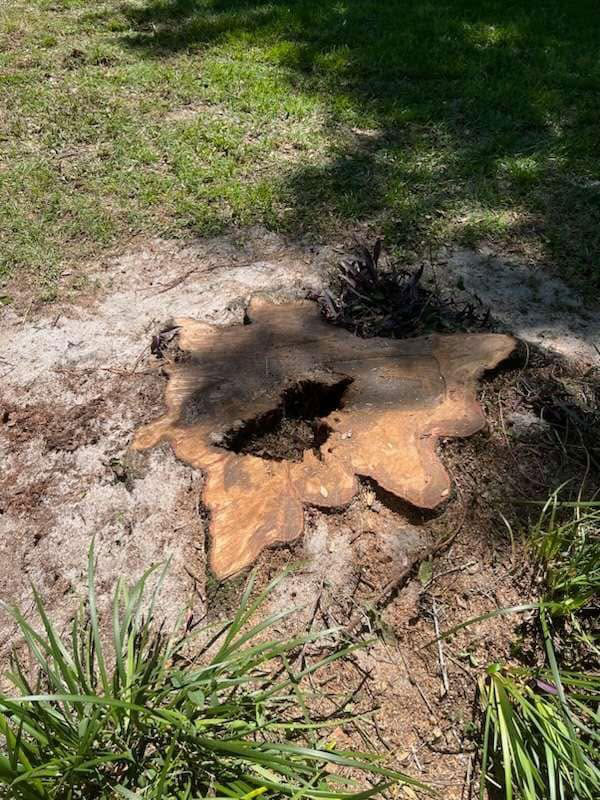
As a tree stump ages, it gradually begins to break down. Moisture, fungi, bacteria, and natural decomposition processes slowly soften the wood and create an environment that differs significantly from a healthy living tree.
Many insects are naturally attracted to decaying organic material. Depending on the tree species, age of the stump, moisture levels, and surrounding conditions, old stumps may attract ants, beetles, termites, and other wood-associated insects.
This does not necessarily mean a stump will create a pest problem. However, as decomposition progresses, the stump can become a habitat that supports increased insect activity compared to surrounding areas of the property.
Can Tree Stumps Attract Termites?
One of the most common concerns homeowners have involves termites.
Termites feed on cellulose, which is found in wood and other plant materials. Because an aging tree stump contains cellulose and often retains moisture, it may provide a food source that attracts termite activity under certain conditions.
It is important to understand that a stump does not automatically cause termites to invade a home. However, an untreated stump can become one of several locations on a property where termites may be active.
For homeowners who have recently removed a tree, addressing the remaining stump may be one step in reducing future maintenance concerns and eliminating a potential source of attraction for wood-destroying insects. In many cases, homeowners begin exploring stump grinding options when evaluating these concerns.
Ants, Beetles, and Other Pests May Also Use Old Stumps
Termites are not the only insects associated with decaying wood.
Old stumps can sometimes provide shelter for carpenter ants, wood-boring beetles, and other insects that prefer damp or decomposing environments. Small animals, reptiles, and various organisms may also use hollow or deteriorating stumps for protection.
The longer a stump remains in place, the more opportunity there may be for natural decomposition and increased biological activity around the stump itself.
For many homeowners, this becomes less about a specific insect and more about long-term property maintenance and landscape management.
Moisture Often Plays a Significant Role
Moisture is one of the primary factors that influences how quickly a stump deteriorates and how attractive it may become to insects.
In the Lake Mary area, frequent rain, irrigation overspray, shade, and humid conditions can all contribute to higher moisture levels within an old stump. As the wood remains damp, decomposition can accelerate and create conditions that support fungal growth and insect activity.
Throughout the Greater Orlando Florida Area, seasonal rain patterns and humid conditions can contribute to the natural breakdown process of untreated stumps over time.
Leaving a Stump Can Create Long-Term Property Maintenance Concerns
Pest concerns are only one reason many homeowners choose to remove a stump after a tree has been taken down.
Old stumps may interfere with landscaping plans, mowing, future planting projects, and general yard usability. As the stump deteriorates, surface roots can remain visible and uneven ground conditions may develop around the area.
After a tree is cut down, the remaining stump can become a separate maintenance issue, which is why many homeowners consider stump grinding as part of the larger tree removal process.
Many homeowners also prefer to remove the stump because they want the property fully restored after the work is completed.
Understanding the long-term effects of leaving a stump behind often helps homeowners determine whether immediate removal is necessary or whether the stump can remain temporarily without creating significant concerns.
Why Stump Grinding Is Often Recommended
Stump grinding removes the visible stump below grade and helps eliminate much of the remaining wood material that would otherwise continue decomposing above ground.
One question homeowners frequently ask is whether stump grinding removes the entire root system. While underground roots typically remain and gradually break down over time, grinding the stump can improve landscape usability.
What Homeowners Should Do If They Are Unsure
Not every stump needs to be removed immediately, and not every old stump will attract termites or other pests.
However, if a stump is already showing signs of advanced decay, retaining moisture, interfering with landscaping plans, or raising concerns about insect activity, it may be worth evaluating whether removal is the best long-term solution.
For homeowners throughout the Greater Orlando Florida Area, the concern is usually not just the stump itself, but what the stump may attract or interfere with over time.
Understanding whether a stump can remain in place, should be monitored, or would benefit from removal usually depends on its condition, location, and the homeowner’s long-term plans for the property.
Frequently Asked Questions About Tree Stumps and Pests
Learn More About Stump Grinding in Lake Mary, FL
If you have questions about an old tree stump on your property, Aggressive Tree Pros can help you evaluate your options. We provide stump grinding services for homeowners in Lake Mary, Winter Park, DeLand, and surrounding areas throughout the Greater Orlando Florida Area.
Whether your concerns involve termites, other pests, landscape restoration, or long-term property maintenance, understanding the condition of the stump is often the first step toward making an informed decision.
Need a professional eye? Call (407) 886-1800, (386) 215-7816 (Español) to request a free estimate or email us at [email protected] to have a certified arborist inspect your trees today.
Like and Follow Aggressive Tree Pros, LLC on Facebook and Instagram for new tree care tips and advice every week.
Book a Free Estimate
Our success is built on your satisfaction. We treat all our customers like they are family. We are ready to meet and exceed your expectations! Our staff includes a certified arborist and is ready to help you every step of the way.
Contact us by email or call (407) 886-1800 to get started today.