Testimonials


-
Matthew and his crew were fantastic, they got here on time, did a great job trimming our very over grown rain tree that was in... read more
 Judith F.
-
Aggressive tree pros is highly recommended. Matt and his crew are dedicated and knowledgeable professionals.
ARSENE P.
-
Amazing job! These guys were professional in removing our massive laurel oak tree that started to uproot. They took care of our existing lawn and... read more
Christy M.


Does Stump Grinding Remove Tree Roots in Lake Mary, FL?
Many homeowners assume that once a stump is ground down, the entire root system is removed with it. That is one of the most common misunderstandings about stump grinding and one of the most frequent questions property owners ask after a tree has been removed.
For homeowners in Lake Mary, Winter Park, DeLand, and surrounding areas throughout the Greater Orlando Florida Area, understanding what happens below ground is important when planning future landscaping, lawn restoration, irrigation improvements, or other property work. While stump grinding removes the visible stump, it does not typically remove the entire root system.
Knowing the difference can help homeowners make informed decisions about their property, avoid unnecessary excavation, and better understand what remains underground after stump grinding is complete.
What Stump Grinding Actually Removes
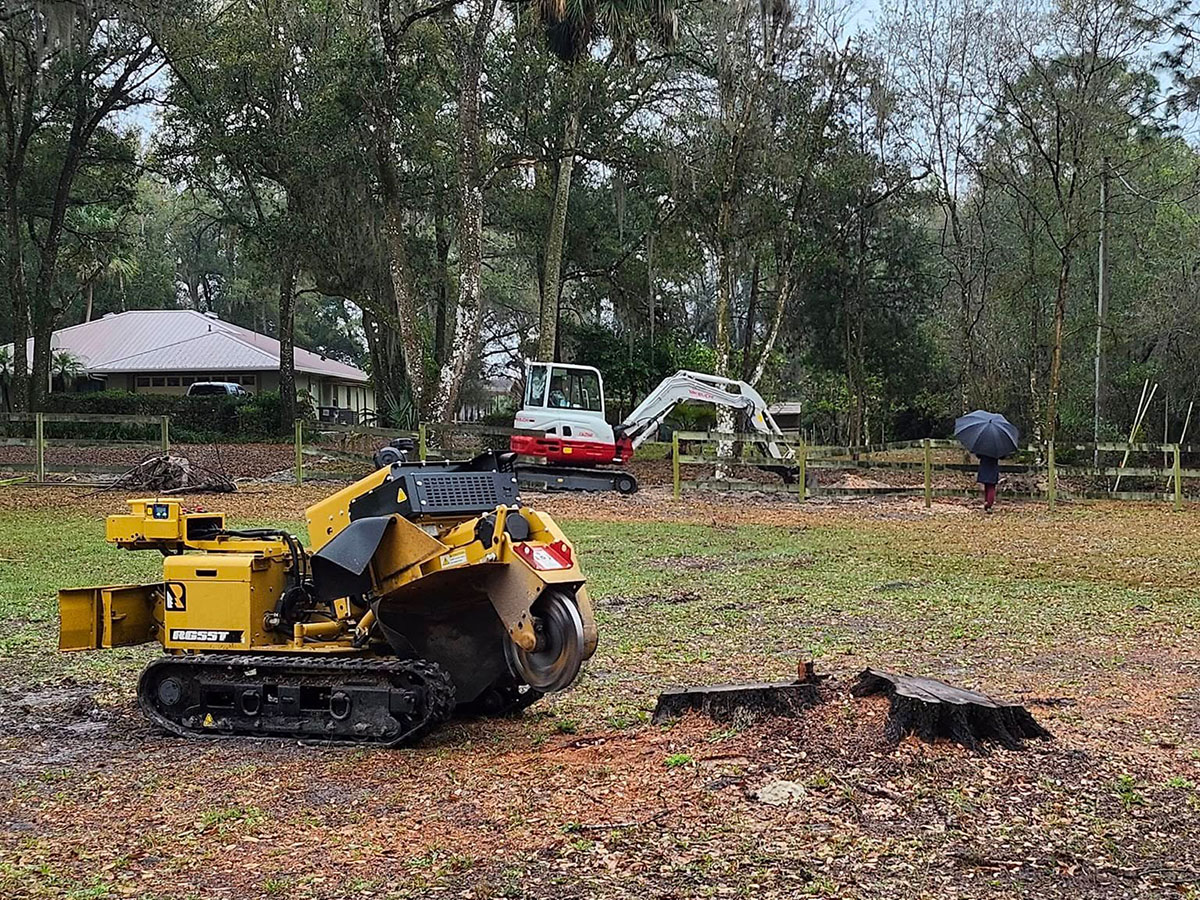
Stump grinding is designed to remove the visible portion of a tree stump that remains after a tree has been cut down. Using specialized equipment, the stump is mechanically ground into small wood chips until it is reduced below the surface of the soil.
This process removes the obstruction that homeowners see in their yard and restores usable space for grass, landscaping, mulch beds, or other improvements.
Unlike complete stump extraction, stump grinding is not intended to excavate every major root connected to the former tree. Instead, it focuses on eliminating the stump itself while minimizing disruption to the surrounding property.
For many homeowners, professional stump grinding services provide the most practical solution because they remove the visible stump without requiring large-scale excavation.
How Deep Does Stump Grinding Go?
The depth of stump grinding depends on several factors, including the size of the stump, the species of tree, site conditions, and how the area will be used afterward.
In many residential situations, the stump is ground several inches below grade so the area can be covered with soil, sod, mulch, or other landscaping materials.
Some homeowners assume that deeper grinding means the roots are being removed as well. In reality, stump grinding depth and root removal are two separate issues. The visible stump can be eliminated below the soil surface while much of the underground root structure remains intact.
The goal of stump grinding is not to remove every root throughout the yard. The goal is to eliminate the visible stump, improve property usability, and prepare the area for future landscaping or lawn restoration.
What Happens to the Roots After Stump Grinding?
After the stump is ground down, most of the underground root system remains in place. This is completely normal.
Once the tree has been removed and the stump can no longer support growth, the root system gradually begins to decline. Soil organisms, moisture, and natural decomposition slowly break down the remaining wood beneath the surface.
This process takes time. Larger roots may remain underground for several years before they fully decompose, while smaller roots often break down much more quickly.
For most homeowners, the important takeaway is simple: roots may remain underground, but they generally stop functioning as an active root system once the tree and stump have been removed and will gradually decompose as part of the natural landscape recovery process.
Do Roots Keep Growing After Stump Grinding?
In most cases, roots do not continue growing aggressively after stump grinding.
Tree roots rely on the living tree above ground. Once the tree has been removed, the roots lose their primary source of energy. Without leaves and branches producing food through photosynthesis, the root system gradually weakens and begins the natural decomposition process.
However, some tree species can be more persistent than others. Certain trees may produce sprouts or sucker growth from remaining root structures. This does not necessarily mean the stump grinding was unsuccessful. It simply means surviving root tissue is attempting to generate new growth.
Homeowners who experience this situation may also want to understand why some tree stumps appear to grow back after removal and why certain tree species are more likely to produce new shoots than others.
Can Remaining Roots Cause Yard Problems?
For most residential properties, remaining roots create few significant issues after stump grinding.
Throughout Lake Mary and surrounding communities across the Greater Orlando area, most homeowners find that roots gradually decompose without requiring excavation or extensive corrective work.
That said, some minor changes may occur over time as the roots break down underground.
- Minor settling of soil in the former root zone
- Small depressions developing in the lawn
- Old root material encountered during future digging projects
- Uneven soil conditions in the immediate area
- Occasional sprouts from certain tree species
These situations are usually manageable and often far less disruptive than removing the entire root system through excavation.
In many cases, the larger concern is leaving the stump itself in place. Stumps can interfere with mowing, landscaping, and the overall usability of a property. This is one reason homeowners often choose stump grinding after tree removal has been completed.
When Would Root Removal Be Necessary?
Complete root removal is not usually required for a typical residential stump grinding project.
However, there are situations where excavation may be necessary, including:
- New construction projects
- Foundation work
- Swimming pool installation
- Utility trenching
- Major grading projects
- Large-scale landscape renovations
Understanding this distinction can help homeowners avoid unnecessary excavation projects when their actual goal is simply reclaiming usable yard space after a tree has been removed.
For most residential properties, stump grinding provides an effective balance between removing the visible stump and preserving the surrounding landscape.
Stump Grinding vs. Digging Out the Entire Root System
Grinding a stump is significantly less invasive than excavating the stump and major roots from the property.
Complete extraction often requires disturbing a much larger section of the yard because roots can extend well beyond the visible stump. Depending on the species, roots may be located beneath turf, planting beds, irrigation systems, sidewalks, or other landscape features.
That is why complete extraction is not always the preferred solution.
For many homeowners, stump grinding provides a practical middle ground. It removes the visible stump, restores usable space, and allows the remaining roots to naturally decompose underground.
If you are evaluating the differences between stump grinding and complete stump removal, understanding your long-term goals for the area is often the most important factor.
Will Decaying Roots Attract Insects?
Many homeowners worry that roots left underground after stump grinding will automatically create insect problems.
While all decomposing organic material interacts with the surrounding environment, underground roots and an exposed stump are not exactly the same situation. Factors such as moisture levels, wood condition, soil conditions, and tree species can all influence what occurs during decomposition.
If pest concerns are part of your decision-making process, it may be helpful to learn more about the relationship between old stumps, termites and other pests, and how decomposition affects the surrounding landscape.
Can You Plant Over the Area After Stump Grinding?
In many situations, yes.
One of the primary advantages of stump grinding is that it allows the area to be reclaimed for future use. Depending on the homeowner’s goals, the space may be converted into:
- New sod or lawn areas
- Landscape beds
- Shrub and ornamental plant installations
- Decorative landscape features
- Expanded outdoor living areas
Some site preparation may be necessary before planting. Excess wood chips are often removed and replaced with clean soil to improve growing conditions.
The objective is not simply to remove the stump. It is to prepare the area for whatever comes next.
Homeowners who are still deciding whether a stump should remain on the property may also benefit from understanding why old tree stumps are often removed after a tree has been cut down.
What Homeowners Should Expect
Stump grinding removes the stump, not every root—and in most cases, that is exactly what homeowners need.
That does not mean the work is incomplete. In fact, stump grinding is specifically designed to solve the issue most homeowners are trying to address: removing the visible stump while minimizing unnecessary disturbance to the property.
For most residential situations, the remaining roots gradually decompose over time without requiring additional work. If future construction, grading, or major landscaping projects are planned, root considerations can be evaluated as part of that planning process.
Homeowners researching the process can learn more about what is included in professional stump grinding services and how the procedure is performed on different types of properties.
Frequently Asked Questions
Talk With Aggressive Tree Pros About Stump Grinding
For homeowners in Lake Mary, Winter Park, DeLand, and surrounding areas throughout the Greater Orlando Florida Area, stump grinding is often the most practical way to reclaim a yard after a tree has been removed.
Aggressive Tree Pros can evaluate the stump, surrounding site conditions, and your future plans for the property to help determine the most effective approach.
If you have questions about stump grinding, underground root systems, or what to expect after a tree has been removed, the team at Aggressive Tree Pros can help you understand your options and determine the most practical solution for your property and future landscaping plans.
Need a professional eye? Call (407) 886-1800, (386) 215-7816 (Español) to request a free estimate or email us at [email protected] to have a certified arborist inspect your trees today.
Like and Follow Aggressive Tree Pros, LLC on Facebook and Instagram for new tree care tips and advice every week.
Book a Free Estimate
Our success is built on your satisfaction. We treat all our customers like they are family. We are ready to meet and exceed your expectations! Our staff includes a certified arborist and is ready to help you every step of the way.
Contact us by email or call (407) 886-1800 to get started today.