Testimonials


-
Amazing job! These guys were professional in removing our massive laurel oak tree that started to uproot. They took care of our existing lawn and... read more
 Christy M.
-
Aggressive Tree Pros and Stump Grinding are professional and thorough. From start to finish first class service. They are my go to when I have... read more
Joanne R.
-
I needed 4 medium sized trees removed from Hurricane damage. Very professional and fair pricing on tree work. Quick estimates and scheduling flexibility. Superclean debri removal. Attention to safety... read more
Joseph M.


Stump Grinding vs. Stump Removal in the Greater Orlando Florida Area
After a tree has been removed, many homeowners in Lake Mary, Winter Park, DeLand, and the surrounding areas throughout the Greater Orlando Florida Area are left with an important decision: should the remaining stump be ground below the surface or completely removed?
Although the terms are sometimes used interchangeably, stump grinding and stump removal are two different services designed for different purposes. Understanding the distinction can help you choose the right approach based on your property’s future use, landscaping plans, and long-term maintenance goals.
For most residential properties, professional stump grinding provides an efficient way to eliminate an unwanted stump and restore usable outdoor space with less disruption. In other situations, complete stump removal may be the better choice. The right option depends largely on what you plan to do with the area afterward.
Understanding the Difference Between Stump Grinding and Stump Removal
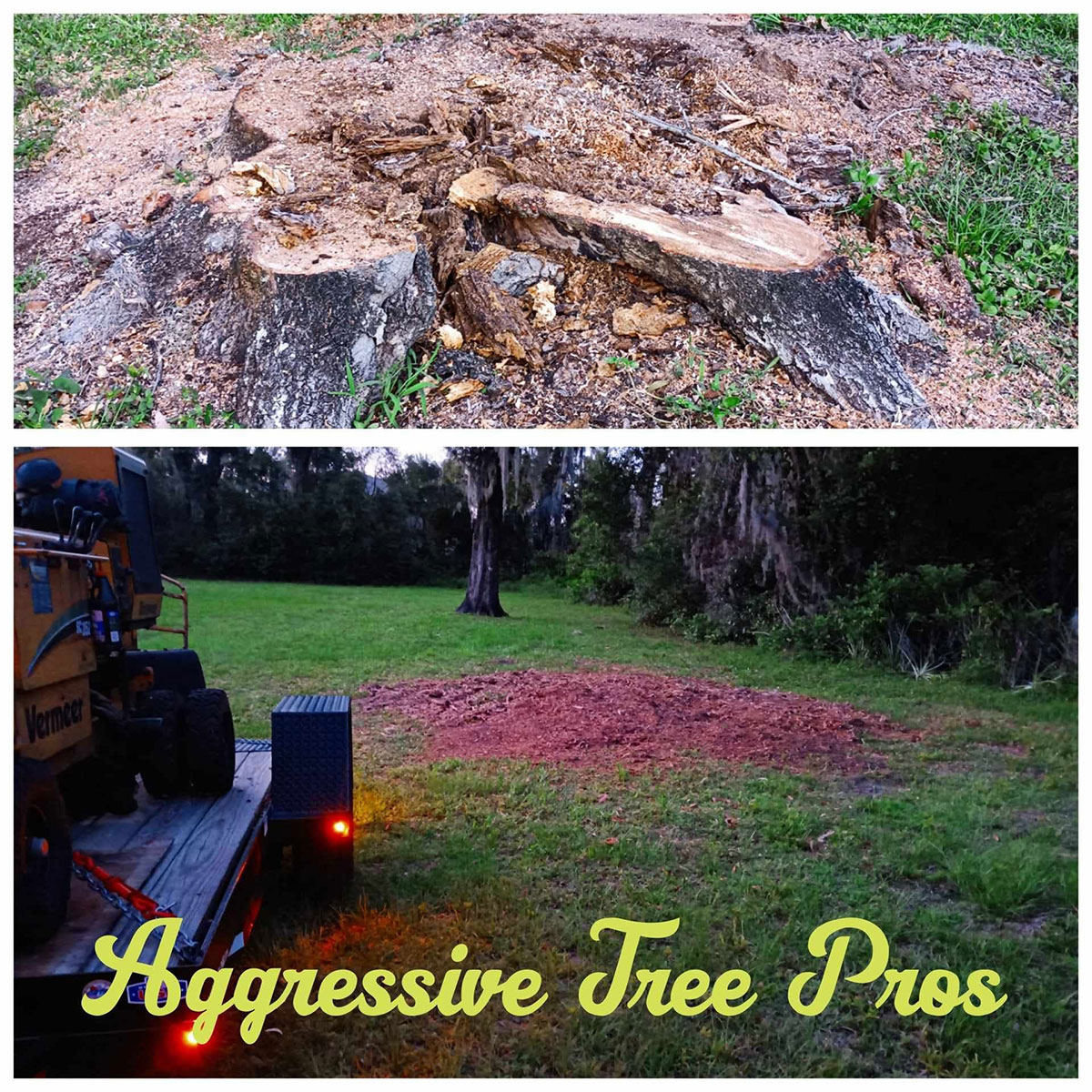
Stump grinding removes the visible stump by mechanically grinding the wood below ground level. The resulting wood chips can then be removed, reused as mulch, or incorporated into the cleanup process before the area is covered with soil, sod, or other landscaping.
Complete stump removal is a more extensive process. Instead of grinding only the stump, the stump and a substantial portion of the surrounding major roots are excavated from the ground. This creates a larger opening that must be backfilled and restored before the area can be reused.
Both methods eliminate the visible stump, but they differ significantly in the amount of excavation, landscape disruption, and restoration work involved.
Why Stump Grinding Is the Preferred Choice for Most Homeowners
For many homeowners, stump grinding offers the best balance between effectiveness, efficiency, and landscape preservation.
Rather than excavating a large section of the yard, grinding focuses primarily on the stump itself. This generally means less disturbance to surrounding grass, nearby landscape beds, irrigation components, sidewalks, and other established property features.
Once the stump has been ground below grade and the area has been properly prepared, the space can usually be returned to practical use more easily than it could after full excavation.
If your goal is to eliminate a mowing obstacle, reduce a tripping hazard, improve curb appeal, increase usable yard space, or prepare the area for new landscaping, stump grinding is often the more practical solution. Homeowners who are still comparing their options may also want to understand why removing an old tree stump is often recommended beyond simply improving appearance.
When Complete Stump Removal May Be the Better Choice
Although stump grinding is appropriate for many residential properties, there are situations in which complete stump removal deserves consideration.
Complete stump removal may be more appropriate when:
- A home addition, foundation, or other structure will be built directly where the stump is located.
- A retaining wall or major hardscape installation requires complete excavation of the area.
- Substantial underground utility work is planned in the immediate location.
- A landscape redesign requires the stump and surrounding root flare to be removed before construction begins.
These situations are less common than routine residential stump grinding, but they demonstrate why the intended future use of the property should guide the decision.
Comparing the Two Options
When deciding between stump grinding and stump removal, it helps to focus on what must happen in the area after the work is complete.
If your objective is to restore the lawn, improve safety, remove an obstacle, or make routine property maintenance easier, stump grinding is usually the less disruptive approach. It removes the part of the stump that interferes with everyday use while limiting the amount of excavation required.
If you are preparing the exact location for construction, structural work, or another project requiring deep excavation, complete stump removal may better support those plans because it removes the stump along with much of the surrounding root flare and major root material.
Neither option is automatically right for every property. The best choice depends on the stump’s location, the condition of the surrounding landscape, access for equipment, and how the area will be used in the future.
What Happens to the Roots After Stump Grinding?
One of the most common homeowner questions is whether stump grinding removes every underground root.
It does not.
Stump grinding removes the visible stump and grinds the main stump structure below grade, while most underground roots remain in place. After the tree has been removed, those roots generally begin decomposing naturally beneath the soil.
Some tree species may temporarily produce sprouts or suckers from surviving roots. This does not necessarily mean the original tree has fully re-established itself, but additional maintenance may occasionally be needed if new growth appears.
Homeowners who want to better understand what remains beneath the ground may find it helpful to learn how stump grinding affects the surrounding root system. If shoots emerge later, it is also useful to understand why some tree stumps appear to grow back after removal.
Thinking About Future Landscaping
Your long-term plans for the area should play an important role in the decision.
If you want to restore the lawn, improve mowing access, or create room for ornamental landscaping, stump grinding is often sufficient.
If the location will become the site of a new structure, footing, retaining wall, or another project requiring substantial excavation, complete removal may prevent conflicts during future construction.
On many Central Florida properties, irrigation systems, mature landscaping, underground utilities, drainage conditions, and limited equipment access can also influence which approach is most practical.
Leaving an old stump in place may create additional maintenance concerns as the wood gradually decays, particularly when homeowners are already concerned about insect or pest activity around the stump.
Consider Why the Tree Was Removed
The condition that led to the tree’s removal may also affect how the remaining stump should be handled.
If the tree was removed because it had become hazardous, diseased, severely damaged, or structurally unstable, addressing the stump can help complete the restoration of the property and remove a remaining obstacle from the landscape.
Homeowners who have not yet decided whether a tree should be removed may benefit from understanding when a tree’s condition calls for trimming instead of complete removal before making a permanent decision.
Choosing the Right Solution for Your Property
The size and location of the stump, available equipment access, surrounding landscaping, nearby structures, underground utilities, and future plans for the area all help determine which option is most appropriate.
For many residential properties, stump grinding provides the desired result: a cleaner appearance, improved safety, easier maintenance, and restored yard space with less disruption to the surrounding landscape.
When major construction or extensive excavation is planned directly where the stump is located, complete stump removal may provide the better long-term solution.
The decision should be based on how the area will be used rather than on the assumption that one method is always superior to the other.
Frequently Asked Questions
Restore Your Landscape With the Right Approach
Choosing between stump grinding and stump removal begins with understanding what each service is intended to accomplish. Stump grinding is the preferred solution for many residential properties because it restores usable space while limiting excavation and landscape disruption. Complete stump removal may be the better choice when future construction or substantial excavation is planned directly in the same location.
Aggressive Tree Pros & Stump Grinding helps homeowners throughout Lake Mary, Winter Park, DeLand, and the surrounding areas throughout the Greater Orlando Florida Area evaluate their options and choose the approach that best supports the property’s immediate needs and long-term use.
Need a professional eye? Call (407) 886-1800, (386) 215-7816 (Español) to request a free estimate or email us at [email protected] to have a certified arborist inspect your trees today.
Like and Follow Aggressive Tree Pros, LLC on Facebook and Instagram for new tree care tips and advice every week.
Book a Free Estimate
Our success is built on your satisfaction. We treat all our customers like they are family. We are ready to meet and exceed your expectations! Our staff includes a certified arborist and is ready to help you every step of the way.
Contact us by email or call (407) 886-1800 to get started today.